
Treasures of History: Reflections on Serbia and Kosovo

I have always loved history, and traveling connects me to the past in ways that study or books cannot. Whether investigating ancient ruins, visiting historic buildings, or admiring a piece of antique furniture, I appreciate the craftsmanship, the stories they tell, and their connection to people who lived long before my generation. During our recent travels through Serbia and Kosovo, I was reminded how much I value preserving old things, even when they are incorporated into modern life.

Having grown up on a farm, I gained an early appreciation for nature and natural materials. Mountains, trees, stones, and wood have always appealed to me, as have the materials people have used for centuries to build their homes and create everyday objects. I much prefer the character of wood and stone to plastic and other petroleum-based products. A wooden floor that has aged gracefully with its bruises and scuffs or a stone staircase worn down by generations of footsteps has a beauty that manufactured materials rarely achieve. Their textures, variations, and imperfections are part of their appeal. Some of the marble slabs in the flooring of Visoki Decani Monastery, built in 1335, were broken; however, the beauty was not diminished, and a treasure remains intact.

Some of this appreciation began with my father, who started a coin collection for me when I was young. I was especially attracted to the Indian Head pennies, which I valued far more than the ordinary Lincoln pennies in circulation. Their age, distinctive design, and connection to an earlier period fascinated me. Same for the buffalo nickels. Even then, I was drawn to things with history, rather than simply new things.

Growing up, my family had limited financial resources, and I learned early to appreciate what we had. I particularly remember receiving hand-me-down clothing from a family who lived down the road and who could afford much nicer clothes than I could. I was delighted to have these garments, even though they were not new. Perhaps these early experiences contributed to my lasting appreciation for things that have been used and loved by others, and my reluctance to discard something simply because it is no longer new or is slightly frayed. Why not repair rather than replace?
The Tailors of Kosovo
Another observation during this trip was the importance of tailors and clothing repair in Kosovo. Kosovo is one of Europe's less affluent countries, and extending the useful life of clothing can be an economic necessity. The persistent relevance of tailors shows a practical approach to keeping possessions rather than replacing them automatically. A torn seam, broken zipper, or worn garment does not necessarily mean an item has reached the end of its useful life. A skilled tailor can often restore it for continued use.

In wealthier countries, we frequently find it easier, and sometimes even less expensive, to purchase something new than to have the original item repaired, causing a disposable culture and a declining appreciation for traditional craftsmanship. I admire the skills of those who can repair clothing, restore furniture, or preserve the authentic features of an old building. These crafts require knowledge and experience that should not be lost. Every time I passed one of these shops, the tailor was busily sewing by hand or machine; Kosovars also highly value their barbers, but that's a different story.
An Unexpected Treasure in Novi Sad, Serbia
While visiting Novi Sad, Serbia, I found an unexpected historical treasure in an H&M clothing store of all places. The store occupies the historic Dunđerski Palace, associated with the prominent Dunđerski family, one of the wealthiest and most influential families in Vojvodina during the 19th and early 20th centuries. They acquired considerable wealth through agriculture, landownership, and business enterprises, and became known for their contributions to the region's economic and cultural development.
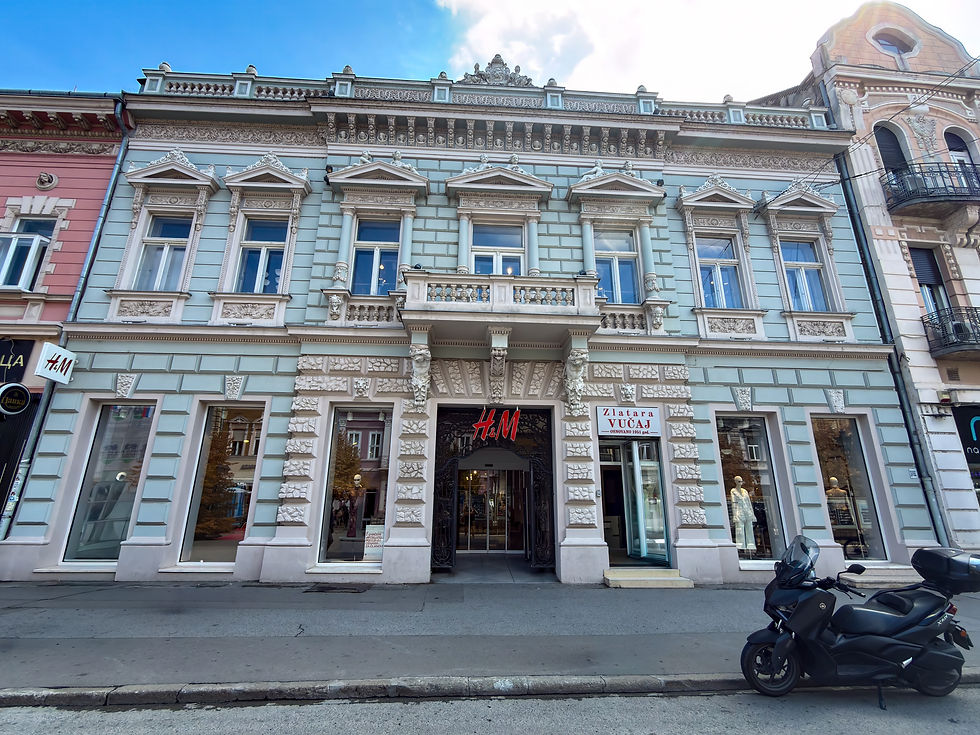
What particularly caught my attention was the magnificent staircase retained within the modern retail store. Rather than removing this architectural feature to accommodate a contemporary business, they preserved it.

How many people had climbed those stairs over the years? What conversations had taken place, and what changes had the building witnessed? A modern international clothing retailer occupied a historic palace while retaining an important part of its architectural character. Preservation and contemporary use need not be incompatible. Unfortunately, many historic buildings lose their distinctive architectural features during renovations. The staircase in Novi Sad is a wonderful reminder that an old building need not become a museum to preserve its history.


Appreciating Imperfections
Some people may disparage a scuffed wooden floor, a cracked slab of marble, or a frayed piece of clothing. I still see the object's beauty and appreciate its layered history. These imperfections often reflect years of use and contribute to its character.
It brings to mind a cherished opal bracelet of mine. One of the opals in the bracelet developed a crack. I took it to a local goldsmith for his evaluation. His response surprised and delighted me. He explained that the opals were perfectly matched and recommended wearing the bracelet exactly as it was. He would only replace the cracked opal if it eventually fell out. His assessment resonated with me. The original opals had been carefully selected to complement one another, and replacing one might compromise that match. The bracelet was still beautiful, even with its imperfection. Sometimes, the best restoration is no restoration at all.
Preserving Our Connections to the Past
I think back to the staircase in Novi Sad, the tailors in Kosovo, and the goldsmith who advised me to keep my cracked opal. Although these experiences were quite different, they all reinforced something I have long believed: age and imperfection do not necessarily diminish beauty or value. History is not found exclusively in museums, monuments, or books. It also survives in the ordinary objects and buildings around us.
Sometimes, preserving a small piece of the past is as simple as recognizing that it is still worth keeping.
Comments